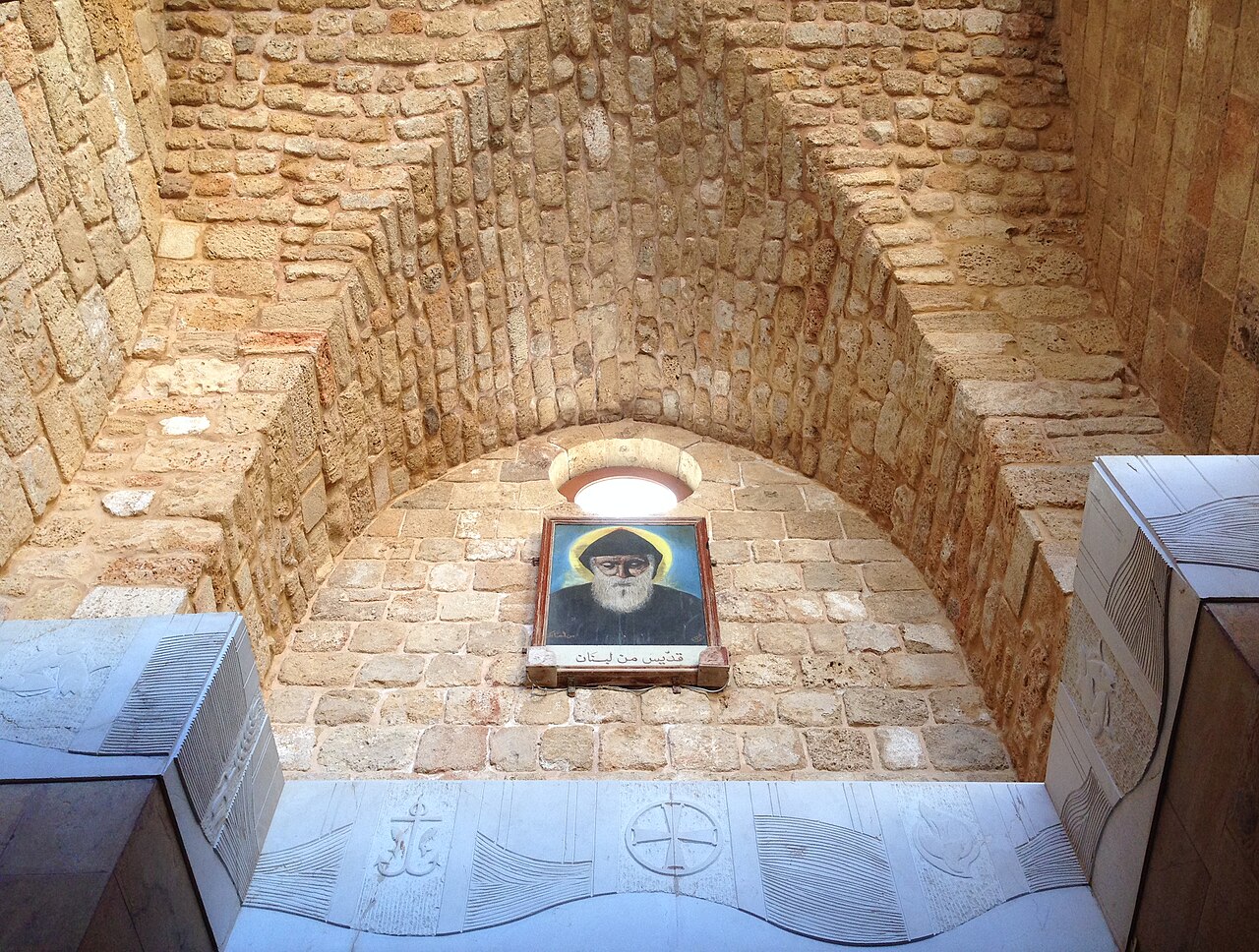
This Saint’s Story
Youssef Antoun Makhlouf came into the world on May 8, 1828, in the mountainous village of Bekaa Kafra, Lebanon. He was the second of five children in a devout family. His father, a mule driver, passed away when Youssef was just three years old, leaving his mother to raise the children alone. She later remarried a man who became a priest, further instilling faith in Youssef. Inspired by his family's piety and the example of two uncles who lived as hermits, he felt a strong calling to a religious life from a young age, often spending his free time in prayer at a grotto dedicated to the Blessed Virgin Mary.
At the age of 23, Youssef made the significant decision to leave his family and pursue a monastic vocation. He joined the Lebanese Maronite Order, beginning his formation at a monastery dedicated to Our Lady. After some time, he moved to the Monastery of Saint Maron, where he adopted the name Charbel, in honor of a 2nd-century martyr. Following years of rigorous study in philosophy and theology, he was ordained as a priest on July 23, 1859. Charbel devoted himself to a life of prayer and service, often helping those in need and administering sacraments to nearby communities.
In 1875, Charbel was granted the opportunity to live as a hermit in a secluded chapel, where he embraced a life of solitude and deep contemplation. For the next 23 years, he dedicated himself to a strict routine of prayer, fasting, and silence, becoming known for his holiness and spiritual depth. His reputation spread, attracting people from various faiths—Christians, Muslims, and Druze—who sought his blessings and intercession.
Charbel passed away on December 24, 1898, after enduring a period of illness. His burial took place on Christmas Day, and soon after, reports of miraculous occurrences began to emerge around his tomb at the Monastery of Saint Maron. When his tomb was opened in later years, witnesses reported that his body had not decayed, which contributed to his growing reputation for holiness. The Church formally recognized his sanctity when Pope Paul VI beatified (declared 'Blessed', the step before sainthood) him on December 5, 1965, and canonized (officially declared a saint by the pope) him on October 9, 1977.
Following his canonization, Charbel's influence continued to expand, with many pilgrims visiting his tomb and seeking his intercession for healing. His life and the miracles attributed to him serve as a source of inspiration, particularly among the Maronite community, where he is honored for his profound spiritual legacy.
