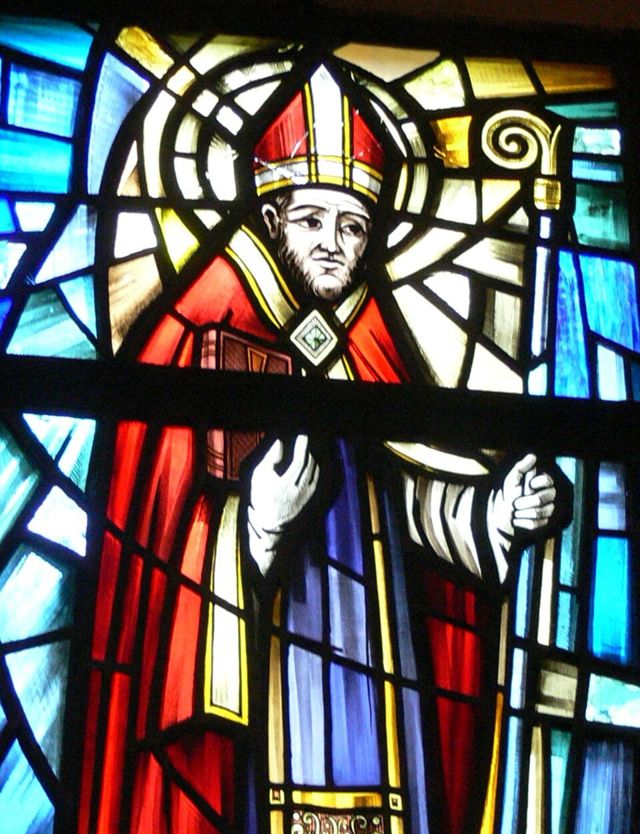
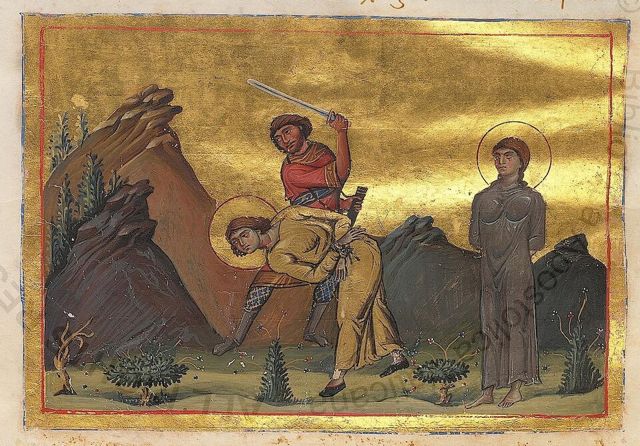
“Come and eat with us,” said Cerbonius. “We are not heretics for eating before Mass.” “That was over an hour ago,” answered the bishop. The legates set out for Rome with the bishop. On the way, they became thirsty, and he found a spring of water for them. He healed three men suffering from fever, which amazed the legates and made them think that he was, after all, a saint and not a heretic. When they approached Rome, they left Cerbonius and went on to Vigilius to tell him about the miracles performed by the bishop on the way.
While Cerbonius was waiting, he saw a flock of geese coming toward him. He immediately made the sign of the cross over them and said, “You do not have permission from the Lord to fly anywhere until you have followed me to the presence of the Lord Pope.” Then he walked forward with his staff, and the geese followed him quietly. Soon, he met the Pope, who was accompanied by his clergy in chasubles and dalmatics, with incense burning, coming to honor the saint who had found a spring of water and at whose word tertian ague had vanished. The two processions met and joined together, and the Pope, followed by his clergy, walked with Cerbonius and the geese in his train to the altar of Saint Peter’s, where Cerbonius blessed the geese and allowed them to go.
The next morning, at daybreak, Cerbonius went into the Pope’s chamber, pulled him out of bed, made him place his foot on Cerbonius's foot, and his hand in Cerbonius's hand, and look up into heaven. He then asked the Pope, who was still groggy from sleep, if he did not hear angels singing. Vigilius, having said he did hear something like that, was allowed to go back to bed while Cerbonius went off to say Mass. After this, the Pope permitted him to say his Mass at any hour of the morning that suited him and sent him back immediately to Piombino.
Totila, the Gothic King, is said by Saint Gregory to have exposed the old bishop to be embraced by a bear in the amphitheater, but the bear, instead of harming him, crouched at his feet and licked them. He was allowed to leave, and he fled to the island of Elba, where he died. His body was brought back to Piombino, where it rests.
Footnotes
- Saint Gregory refers to Pope Gregory I, who lived from 540 to 604 AD.
Baring-Gould’s own footnotes, in modern English.
Read the original 1870s text
Baring-Gould’s sources: Roman Martyrology. Authorities: — Mention by S. Gregory the Great in his Dialogues, and a life written not before the 10th cent.] S. Cerbonius, a native of northern Africa, on the Vandal invasion fled to Italy and came to Piombino, of which city he became bishop. The people of the neighbourhood were, however, speedily tired of their bishop, for every Sunday he rose at break of day and said mass. When they arrived at the church the bishop and his clergy were breakfasting, and they had to return to their homes without having performed their religious duties. At length they could endure it no longer, and complained to Pope Vigilius, who, on hearing of what Cerbonius did, blazed up into wrath, and sent legates to Piombino to bring the bishop to Rome. They arrived on Saturday. Next morning very early, Cerbonius awoke and said to his deacon, “ Go out and see if the time has arrived for mass.” The deacon returned to say that a white streak was showing above the eastern hills. Cerbonius and his priests accordingly got up and said mass. When the legates crawled out of bed, they found the bishop and his clergy enjoying their breakfasts.
“ Come and eat with us,” said Cerbonius. “We are not heretics to eat before mass.” “ That is over an hour ago,” answered the bishop. The legates started for Rome with the bishop. On the way they got thirsty, and he discovered for them a spring of water. He cured three men suffering from fever, and astonished the legates into thinking that, after all, he was a saint, and not a heretic When they came near to Rome,
they left Cerbonius and went on to Vigilius and told him of the marvels wrought by the bishop on the way. Whilst Cerbonius was waiting, he saw a flight of geese coming his way. He at once made the sign of the cross over them and said, “You have not licence from the Lord to fly anywhere till you have followed me to the presence of the Lord Pope.” Then he marched forward with his staff, the geese following demurely, — and lo ! he met the Pope, attended by his clergy in chasubles and dalmatics, with incense burning, coming to do honour to the saint who had found a spring of water and at whose word tertian ague had disappeared. The two processions met and united, and the Pope, followed by his cleigy, walked with Cerbonius and the geese in his train to the altar of S. Peter’s, where Cerbonius blessed the geese and gave them leave to depart.
Next morning, at daybreak, Cerbonius went into the Pope’s chamber, pulled him out of bed, and made him put his foot on his own foot, and his hand in his own hand, and look up into heaven. He then asked the Pope, stupefied with sleep, if he did not hear angels singing, and Vigilius having said he did hear something of the kind, was allowed to go back to bed again, whilst Cerbonius went off to say mass. After this the Pope gave him leave to say his mass at any hour of the morning that pleased him, and sent him back at once to Piombino.
Totila, the Gothic King, is said by S. Gregory to have exposed the old bishop to be hugged by a bear in the amphitheatre, but the bear, instead of hurting him, crouched at his feet and licked them. He was allowed to depart, and he fled to the isle of Elba, and there died. His body was brought back to Piombino, and there reposes.