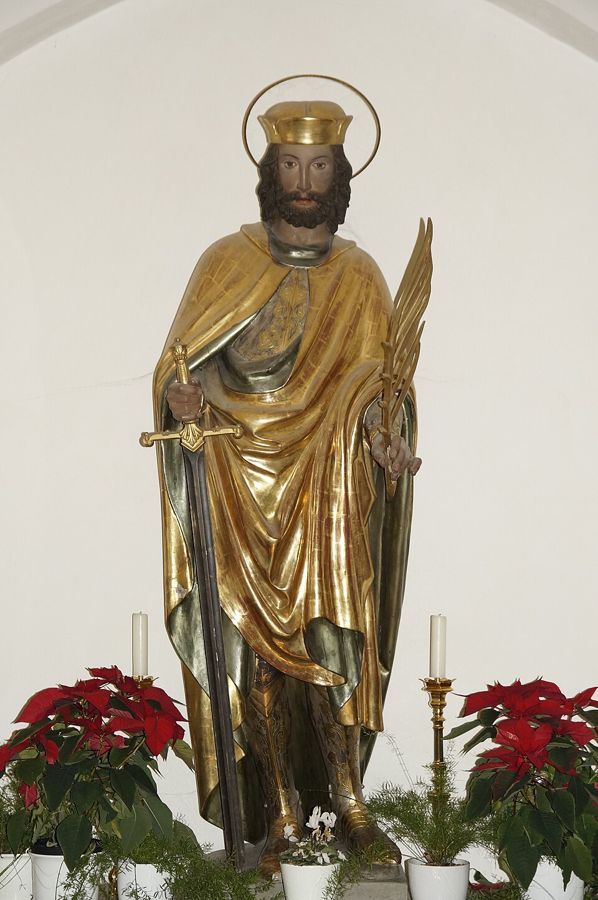
Saint Castulus, chamberlain of the palace to Diocletian, was wont to receive Christians into his house, and screen them from the pursuit of the magistrates.
Read the essentials →Saint Castulus, chamberlain of the palace to Diocletian, was wont to receive Christians into his house, and screen them from the pursuit of the magistrates.
Read the essentials →March 26 (also listed: March 27, December 18)
March 26
Martyr
Short entry · the summary here is 75 words; Baring-Gould’s fuller original text and its sources are below. We have not filled any gap with invented detail.
Stay faithful when it costs you. Holding firm under pressure is part of this story.
Celebrate this saint’s feast day. Remember him on March 26 with a short prayer, and ask for his help.
Saint Castulus, who was the chamberlain of the palace to Diocletian, often welcomed Christians into his home and protected them from the pursuit of the authorities. He was reported to Fabian, the prefect of the city, who tortured him in various ways before having him thrown into a pit and buried in sand. He was betrayed by a former Christian named Torquatus, the same person that Cardinal Wiseman mentioned in his historical account of "Fabiola."
Saint Castulus, chamberlain of the palace to Diocletian [Roman emperor 284–305, who began the ‘Great Persecution’ of Christians in 303], was wont to receive Christians into his house, and screen them from the pursuit of the magistrates. He was denounced to Fabian, the prefect of the city, who, after having tortured him in many ways, had him cast into a pit and buried in sand. He was betrayed by a renegade Christian named Torquatus, the same whom Cardinal Wiseman has introduced into his historical sketch of "Fabiola."
Feast: March 26
One short email a day for nine days. The day's prayer, a line from St. Castulus's story, and a nudge to keep going.
Image: Moosburg Kastulus Ursulakapelle.jpg · selbst fotografiert · Public domain, via Wikimedia Commons
Image: selbst fotografiert, Wikimedia Commons (Public domain)
Retold in plain modern English from Baring-Gould’s public-domain text, sentence by sentence, keeping the same facts and order. Short explanations in parentheses are ours.
From Sabine Baring-Gould, The Lives of the Saints, new edition in 16 vols. (London: John C. Nimmo, 1897), digitized text from Project Gutenberg. Public domain in the United States. Reproduced unedited, except for short bracketed notes in grey that we added to explain names and terms (“S.” is the old abbreviation for Saint). Some history and judgments reflect 19th-century scholarship.
