St. Canute Lavard

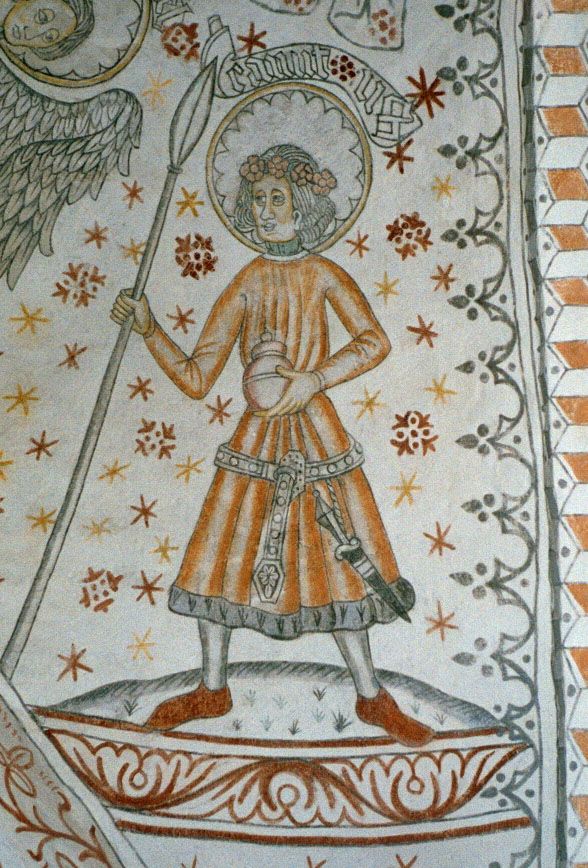
Canute Lavard was the son of Eric the Good, king of Denmark. Nicolas had a son named Magnus, who was also brought up with Canute.

Read the essentials →
Feast January 7 · Martyr

St. Canute Lavard

Current feast

January 7
Secondary source · Wikipedia infobox

Traditional feast

January 7
1914 / pre-1969 calendar, per Baring-Gould (1914)

Represents

Martyr

Feast days

Feast: January 7

This Saint’s Story

Adapted in modern English from Baring-Gould (1914) · original text below

Because Canute was very young, his half-brother Niels took the throne, and Niels's son Magnus was brought up with Canute. Canute bought the duchy of Schleswig and cleared the Danish seas and islands of pirates. A captured pirate once cried out that he was of royal blood and kin to the duke. 'Then,' said Canute, 'you shall hang from the masthead, above the others.'

He later also became ruler of the Wends (Slavs). His gentleness, virtue and piety made him popular, and Magnus feared he would claim the Danish crown, to which he had a better right. In January 1131 (Baring-Gould gives 1133), Magnus lured his unsuspecting kinsman into a wood near Ringsted, surrounded him with armed men, and killed him. He was canonized (officially declared a saint by the pope) in 1170.

What he represents

How he teaches us to live

Drawn from themes in the original account

Celebrate this saint’s feast day. Remember him on January 7 with a short prayer, and ask for his help.

The full story

Baring-Gould’s account retold in modern English

Read the full story · 182 words · about 1 min

Canute Lavard was the second son of Eric the Good, who was the King of Denmark. His older brother, Nicolas, became King of Denmark, even though he was illegitimate, as Canute was still very young at that time. Nicolas had a son named Magnus, who was also raised alongside Canute. Canute bought the duchy of Schleswig and focused on clearing the seas and islands of Denmark of the pirates who plagued them. On one occasion, a pirate whom he had captured and condemned to be hanged, shouted that he was of royal blood and was related to Canute. "Then," said the duke, "you shall hang at the topmast head above the others."

After Henry, the King of the Sclaves, died, Canute succeeded him. The popularity of this prince, due to his gentleness, virtue, and piety, stirred up envy in Magnus, who feared that Canute might claim the throne of Denmark, a claim he indeed had prior to Magnus and his father. To secure his own succession, Magnus lured his unsuspecting kinsman into a forest, surrounded him with armed men, and killed him.

Footnotes

  1. On the Blackwater; there is no city there now, but numerous traces of an ancient settlement, and an old chapel marks the site, in the parish of Bradwell.
  2. Lastingham, near Pickering, in Yorkshire.
  3. S. Lucian, B. M., and Companions, at Beauvais.
  4. S. Patiens, B. of Metz, circa A.D. 152.
  5. S. Atticus, Patriarch of Constantinople, A.D. 425.
  6. S. Severinus, P. and Apostle of Austria, A.D. 482.
  7. S. Severinus, B. C., in Italy, 6th century.
  8. B. Baldwin, Archdeacon of Laon, M., 6th century.
  9. S. Frodobert, Abbot, at Troyes, 7th century.
  10. S. Gudula, Virgin, at Brussels, circa A.D. 712.
  11. S. Pega, Virgin, in England, circa A.D. 718.
  12. S. Erard, Bishop in Bavaria, 8th century.
  13. S. Garibald, Bishop of Ratisbon, circa A.D. 1252.
  14. S. Wulsin, Bishop of Sherbourn, A.D. 983.
  15. S. Laurence Justiniani, Patriarch of Venice, A.D. 1455.

Baring-Gould’s own footnotes, in modern English.

Read the original 1870s text

Baring-Gould’s sources: Schleswig and Scandinavian Breviaries. Life in Knytlinga Saga, Saxo Grammaticus, Schleswig Breviary, &c.

Canute Lavard was second son of Eric the Good, King of Denmark. His elder brother, Nicolas, became King of Denmark, though he was illegitimate, as Canute was very young. Nicolas had a son named Magnus, who was also brought up with Canute. Canute purchased the duchy of Schleswig, and occupied himself with clearing the seas and islands of Denmark of the pirates who infested them. On one occasion, a pirate whom he had captured, and condemned with others to be hung, cried out that he was of royal blood, and was related to Canute. "Then," said the duke, "you shall hang at the topmast head above the others."

Henry, King of the Sclaves, being dead, Canute succeeded him. The popularity of this prince, owing to his gentleness, virtue, and piety, stirred up the envy of Magnus, who feared lest he should put in a claim to the throne of Denmark, to which indeed he had a right prior to Magnus and his father. In order to make sure of the succession, Magnus decoyed his unsuspicious kinsman into a wood, surrounded him with armed men, and killed him.

FOOTNOTES:

[31] On the Blackwater; there is no city there now, but numerous traces of an ancient settlement, and an old chapel marks the site, in the parish of Bradwell.

[32] Lastingham, near Pickering, in Yorkshire.

[33] Bede [English monk and historian (d. 735)] iii. 25.

S. Lucian , B. M. , and Companions , at Beauvais . S. Patiens , B. of Metz, circ. a.d. 152. S. Atticus , Patr. of Constantinople , a.d. 425. S. Severinus , P. and Apostle of Austria , a.d. 482. S. Severinus , B. C., in Italy, 6th cent. B. Baldwin , Archdeacon of Laon, M., 6th cent. S. Frodobert , Ab., at Troyes, 7th cent. S. Gudula , V., at Brussels, circ. a.d. 712. S. Pega , V., in England, circ. a.d. 718. S. Erard , Bishop in Bavaria, 8th cent. S. Garibald , B. of Ratisbon [Regensburg in Bavaria], circ. a.d. 1252. S. Wulsin , B. of Sherbourn , a.d. 983. S. Laurence Justiniani , Patr. of Venice , a.d. 1455.
Patron saint of

  • Ringsted and Schleswig
    He was duke of Schleswig, and Ringsted is his burial place.

Help us add to this saint's story

Everything is read by a person before anything appears. Facts are checked against trusted sources first.

Facts are welcome; a source link helps (optional).With your permission we may share it on this page.

Nine days · Free

Pray the novena
with us.

One short email a day for nine days. The day's prayer, a line from St. Canute Lavard's story, and a nudge to keep going.

Also on January 7
St. Lucian of Antioch

St. Lucian of Antioch

January 7 · Priest, Martyr
V

St. Valentine of Passau

January 7 · Bishop
C

St. Cedd of London

January 7 · Bishop
← All 1970 saints in the library
Sources & notes

Feast-day sources

Story sources

Sources

Credits

Image: Knut Lavard.jpg · No machine-readable author provided. FredrikT assumed (based on copyright claims). · CC BY-SA 3.0, via Wikimedia Commons

Image: No machine-readable author provided. FredrikT assumed (based on copyright claims)., Wikimedia Commons (CC BY-SA 3.0)

Retold in plain modern English from Baring-Gould’s public-domain text, sentence by sentence, keeping the same facts and order. Short explanations in parentheses are ours.

From Sabine Baring-Gould, The Lives of the Saints, new and revised edition (Edinburgh: John Grant, 1914; first edition 1872). Public domain in the United States. Reproduced unedited, except for short bracketed notes in grey that we added to explain names and terms (“S.” is the old abbreviation for Saint). Some history and judgments reflect 19th-century scholarship.