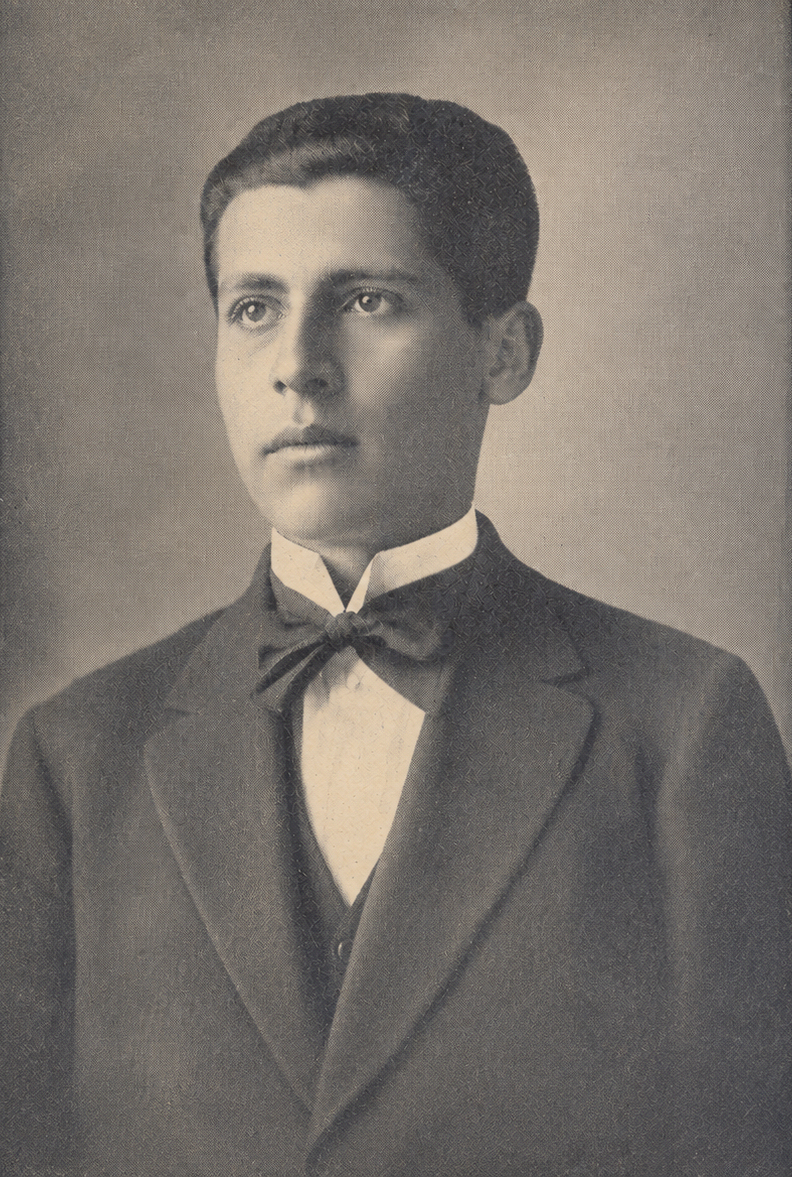
This Saint’s Story
Alberto Hurtado was born on January 22, 1901, in Viña del Mar, Chile, into an aristocratic family. His early life was marked by hardship after losing his father at the age of four. This loss forced his mother to sell their estate at a loss, leading the family into poverty and instability as they moved between relatives. These experiences of hardship instilled in Hurtado a deep empathy for the poor and marginalized.
Hurtado's education began at the Jesuit (member of the Society of Jesus, founded by St. Ignatius of Loyola) school of St. Ignacio in Santiago, where he volunteered at a local parish, nurturing his commitment to social justice. He later studied law at the Pontificia Universidad Católica de Chile, graduating in 1923. After entering the Jesuit order, he pursued further studies in theology and philosophy in Argentina, Spain, and Belgium, culminating in his ordination as a priest in 1933.
Returning to Chile in 1936, Hurtado became a professor and actively engaged in social issues, advocating for the poor and addressing the church's role in society. His notable work included the publication of 'Is Chile a Catholic Country?' in 1941, which highlighted the lack of priests serving the working class and rural populations. Hurtado's insights often faced criticism from conservative circles, but he remained steadfast in his mission.
In 1944, Hurtado founded the Hogar de Cristo, a network of shelters for homeless children and families. His initiative was inspired by his own childhood experiences and aimed to provide not just shelter but a nurturing environment. Hurtado also became involved in labor movements, advocating for workers' rights and establishing the Chilean Trade Union Association in 1947.
Hurtado's life was cut short by pancreatic cancer, which he battled until his death on August 18, 1952. He is remembered for his work with the poor and with workers. He was beatified (declared 'Blessed', the step before sainthood) on October 16, 1994, and later recognized as a saint on October 23, 2005.
