St. Agapetus I., Pope

Agapetus, also called Agapitus, was the son of Gordianus, a Roman priest slain in the riots of Symmachus's time.

Read the essentials →
Feast September 20 · —

St. Agapetus I., Pope

Current feast

September 20 (also listed: April 22, April 17)
Secondary source · Wikipedia infobox

Traditional feast

September 20
1914 / pre-1969 calendar, per Baring-Gould (1897)

Represents

Feast

Feast days

Feast: September 20

This Saint’s Story

Baring-Gould adds that he belonged to the church of Saints John and Paul. He became pope in 535 after John II. His first official act was to burn, before the assembled clergy, the anathema Boniface II had pronounced against his rival Dioscurus and ordered kept in the archives. He confirmed Carthaginian decrees after Africa's liberation from Vandal rule, limiting orders for converts from Arianism (followers of Arius's teaching that the Son is a created being, not fully God), and he ordered Caesarius of Arles to grant Contumeliosus of Riez a new trial on appeal.

When Belisarius prepared to invade Italy, the Gothic king—named Theodehad in the Catholic Encyclopedia and Theodotus in Baring-Gould—begged the aged pope to plead with the Emperor Justinian at Constantinople. To pay for the winter journey Agapetus pledged the sacred vessels of the Roman Church. He arrived in February 536 and was received with high honour. As he had foreseen, Justinian would not abandon the Italian campaign. Ecclesiastically, however, the visit became a decisive assertion of Roman authority.

Anthimus had left Trebizond and, with the Empress Theodora's help, occupied the see of Constantinople as a crypto-Monophysite. Agapetus ordered him to profess the faith in writing and return to his own see. When he refused, the pope would have no communion with him. Justinian threatened banishment. Agapetus answered that he had come to see a most Christian emperor and instead found a Diocletian (Roman emperor 284–305, who launched the last and fiercest persecution of Christians in 303) whose threats did not terrify him. Convinced at last of Anthimus's unsoundness, Justinian allowed the deposition. Agapetus then personally consecrated Mennas, the first time a pope is recorded as consecrating a Constantinopolitan patriarch.

Justinian also offered a written confession of faith, which Agapetus accepted while denying a layman's right to teach religion. Shortly afterwards the pope fell ill and died on 22 April 536, after a reign of about ten months. His body was brought to Rome in a lead coffin and laid in St Peter's. The Latin memorial is kept on 20 September; the Greeks commemorate him on the day of his death.

What he represents

How he teaches us to live

Drawn from themes in the original account

Celebrate this saint’s feast day. Remember him on September 20 with a short prayer, and ask for his help.

The full story

Baring-Gould’s account retold in modern English

Read the full story · 259 words · about 1 min

In the year 536, Agapetus was received with the highest honors. Justinian had already paused his military preparations for a short time, but Agapetus found matters more within his control, which allowed him to act independently and boldly in front of the ruler of the East. The see of Constantinople had become vacant, and the actress Theodora, whom Justinian had raised to share his throne, decided to fill it with a favored bishop, Anthimus of Trebizonde, who was suspected of Eutychian beliefs. Agapetus refused to acknowledge or communicate with a bishop who had been transferred, in violation of church laws, from one diocese to another, and who was also thought to hold questionable orthodox views. Supporters of Anthimus and Theodora accused the innocent pope of Nestorianism. Justinian, influenced by his wife, ordered the Pope to recognize the new Metropolitan; however, he was yet to learn that a Pope of Rome would not be commanded by an imperial ruler.

"I came here in my old age," said the fearless bishop, "to see, as I thought, a religious and Christian Emperor. Instead, I find a new Diocletian. I do not fear your threats; I would rather die than give up the truth."

Justinian was intimidated and quickly changed his mind, rejecting Anthimus. Mennas, who was nominated to replace him, was consecrated by the Pope, who died shortly after. The funeral rites for Agapetus were held with great splendor, and his body was sent to Rome so that it could rest with his predecessors on the throne of Saint Peter. Saint Matthew,

Read the original 1870s text

Baring-Gould’s sources: Roman Martyrology and Greek Menaea. Authorities: — Anastasius Bibliothecarius, the Libellus de Reb. Gestis ab Agap. ad Constant., &c.] S. Agapetus was a native of Rome, and belonged to the church of SS. John and Paul. His great sanctity recommended him to the electors, when the papal throne was vacated in 535 by the death of Pope John II. The Emperor Justinian sent him a profession of his faith, which the Pope pronounced orthodox, and in compliance with the request of Justinian, he condemned the Sleepless Ones, a religious community at Constantinople, as tainted with Nestorianism. Theodotus, King of the Goths in Italy, hearing that Justinian was meditating the invasion of Italy, in the agony of his fear, had recourse to the same measure that had been pursued by the great Theodoric. He persuaded or compelled the aged Pope to proceed on an embassy to Constantinople, to ward off the impending danger, to use his influence and authority lest a Roman and orthodox Emperor should persist in his attempt to wrest Italy and Rome from a barbarous Arian; and Theodotus commanded the pontiff to be the bearer of menaces to be proclaimed should pacific negotiations fail. He was to threaten, if Justinian pursued his intention of transferring the victorious army under Belisarius from Africa to Italy, that the senate should be put to the sword, and the imperial city of Rome be razed to the ground. The embassy arrived in Constantinople on February 2, Lives of the Saints.

In A.D. 536, and Agapetus was received with the highest honours. Justinian [Byzantine emperor 527–565] had already suspended, for a short time, his warlike preparations; but Agapetus found affairs more within his province, which enabled him to display independent and bold conduct before the despot of the East. The see of Constantinople [a bishop’s “see” is his diocese, named from his seat (Latin sedes)] had fallen vacant, and the actress Theodora, whom Justinian had elevated to share his throne, resolved to fill it with a favourite prelate, Anthimus of Trebizonde, suspected of Eutychian [followers of Eutyches, who said Christ had only a divine nature; condemned at Chalcedon in 451] leanings. Agapetus refused to acknowledge and communicate with a prelate who had been translated, in violation of the canons, from one diocese to another, and who, moreover, was thought not to hold unblemished orthodox views. Counter-charges of Nestorianism [Nestorius (d. c. 451), whose teaching split Christ into two persons; condemned at Ephesus in 431] were raised by the partisans of Anthimus and Theodora against the blameless pontiff. Justinian, under the influence of his wife, ordered the Pope to recognise the new Metropolitan; but he had yet to learn that a Pope of Rome would not be ordered by an imperial despot. u I came hither in my old age/" said the undaunted prelate, “ to see, as I supposed, a religious and a Christian Emperor. I find a new Diocletian [Roman emperor 284–305, who began the ‘Great Persecution’ of Christians in 303]. I fear not your menaces, I will die rather than yield up the truth."

Justinian was overawed, and at once veered round and rejected Anthimus. Mennas, nominated in his room, was consecrated by the Pope, who died shortly after. The funeral rites of Agapetus were celebrated with great magnificence, and his body was sent to Rome, that it might rest with his predecessors on the throne of S. Peter. S. Matthew,

From the Catholic Encyclopedia

1913 · 705 words

​Agapetus I (also Agapitus), Saint, Pope (535–536), date of birth uncertain; d. 22 April, 536. He was the son of Gordianus, a Roman priest who had been slain during the riots in the days of Pope Symmachus. His first official act was to burn in the presence of the assembled clergy the anathema which Boniface II (q. v.) had pronounced against the latter's rival Dioscurus and had ordered to be preserved in the Roman archives. He confirmed the decrees of the council held at Carthage, after the liberation of Africa from the Vandal yoke, according to which converts from Arianism [followers of Arius, who taught that the Son is a created being, not fully God] were declared ineligible to Holy Orders and those already ordained were merely admitted to lay communion. He accepted an appeal from Contumeliosus, Bishop of Riez, whom a council at Marseilles had condemned for immorality, and he ordered St. Cæsarius of Aries to grant the accused a new trial before papal delegates. Meanwhile Belisarius, after the very easy conquest of Sicily, was preparing for an invasion of Italy. The Gothic king, Theodehad as a last resort, begged the aged pontiff to proceed to Constantinople and bring his personal influence to bear on the Emperor Justinian [Byzantine emperor 527–565]. To defray the costs of the embassy Agapetus was compelled to pledge the sacred vessels of the Church of Rome. He set out in midwinter with five bishops and an imposing retinue. In February, 536, he appeared in the capital of the East and was received with all the honours befitting the head of the Catholic Church. As he no doubt had foreseen, the ostensible object of his visit was doomed to failure. Justinian could not be swerved from his resolve to re-establish the rights of the Empire in Italy. But from the ecclesiastical standpoint, the visit of the Pope in Constantinople issued in a triumph scarcely less memorable than the campaigns of Belisarius. The then occupant of the ​Byzantine See was a certain Anthimus, who without the authority of the canons had left his episcopal see of Trebizond [a bishop’s “see” is his diocese, named from his seat (Latin sedes)] to join the crypto-Monophysites who, in conjunction with the Empress Theodora were then intriguing to undermine the authority of the Council of Chalcedon. Against the protests of the orthodox, the Empress finally seated Anthimus in the patriarchal chair. No sooner had the Pope arrived than the most prominent of the clergy entered charges against the new patriarch [the title of the bishops of the great ancient sees: Rome, Constantinople, Alexandria, Antioch, Jerusalem] as an intruder and a heretic. Agapetus ordered him to make a written profession of faith and to return to his forsaken see; upon his refusal, he declined to have any relations with him. This vexed the Emperor, who had been deceived by his wife as to the orthodoxy of her favourite, and he went so far as to threaten the Pope with banishment. Agapetus replied with spirit: "With eager longing have I come to gaze upon the Most Christian Emperor Justinian. In his place I find a Diocletian [Roman emperor 284–305, who began the ‘Great Persecution’ of Christians in 303], whose threats, however, terrify me not." This intrepid language made Justinian pause; and being finally convinced that Anthimus was unsound in faith, he made no objection to the Pope's exercising the plenitude of his powers in deposing and suspending the intruder and, for the first time in the history of the Church, personally consecrating his legally elected successor, Mennas. This memorable exercise of the papal prerogative was not soon forgotten by the Orientals, who, together with the Latins, venerate him as a saint. In order to clear himself of every suspicion of abetting heresy, Justinian delivered to the Pope a written confession of faith, which the latter accepted with the judicious proviso that "although he could not admit in a layman the right of teaching religion, yet he observed with pleasure that the zeal of the Emperor was in perfect accord with the decisions of the Fathers". Shortly afterwards Agapetus fell ill and died, after a glorious reign of ten months. His remains were brought in a leaden coffin to Rome and deposited in St. Peter's. His memory is kept on 20 September, the day of his deposition. The Greeks commemorate him on 22 April, the day of his death.

Liber Pontificalis (ed. Duchesne), I, 287–289; Cleus in Acta SS., Sept., VI, 163–179; Artaud de Montor, Lives of the Popes (New York, 1867), I, 123, 124.
Help us add to this saint's story

Everything is read by a person before anything appears. Facts are checked against trusted sources first.

Facts are welcome; a source link helps (optional).With your permission we may share it on this page.

Nine days · Free

Pray the novena
with us.

One short email a day for nine days. The day's prayer, a line from St. Agapetus I.'s story, and a nudge to keep going.

Also on September 20
Sts. Eustathius and Others

Sts. Eustathius and…

September 20 · Martyrs
S

St. Susanna (September…

September 20 · Virgin, Martyr
A

St. Andrew Kim Taegon

September 20 · Priest, Martyr
← All 1970 saints in the library
Sources & notes

Feast-day sources

Story sources

Sources

Credits

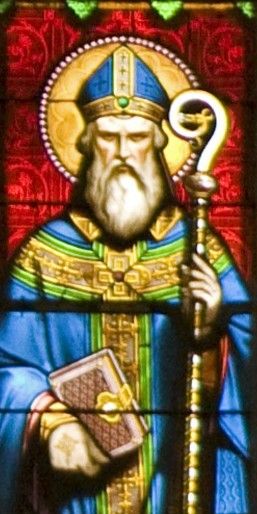
Image: Saint Maixent l'École-Abbatiale Saint Maixent-Vitraux du choeur-20110307(Agapetus crop).jpg · Dvillafruela · CC0, via Wikimedia Commons

Image: Dvillafruela, Wikimedia Commons (CC0)

From “Catholic Encyclopedia (1913)/Pope St. Agapetus I,” The Catholic Encyclopedia (New York: Robert Appleton Company, 1907–1914), via Wikisource. Public domain. Matched by name and feast date; text unedited except for our bracketed notes in grey.

Retold in plain modern English from Baring-Gould’s public-domain text, sentence by sentence, keeping the same facts and order. Short explanations in parentheses are ours.

From Sabine Baring-Gould, The Lives of the Saints, new edition in 16 vols. (London: John C. Nimmo, 1897–98); text from the Internet Archive scan (OCR, lightly cleaned; errors possible). Public domain in the United States. Reproduced unedited, except for short bracketed notes in grey that we added to explain names and terms (“S.” is the old abbreviation for Saint). Some history and judgments reflect 19th-century scholarship.

Notes

Story retold in our own words from the cited sources.