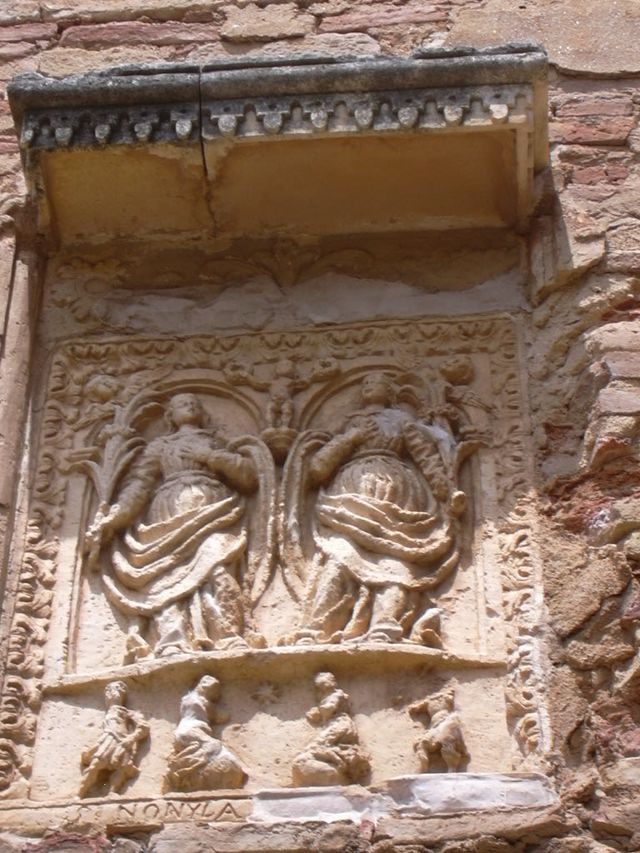
Their Story
Eulogius of Córdoba, writing in 851 in his Memorial of the Saints, is the witness closest to their time, and both Butler and the modern accounts start from him. Their mother was a Christian. Their father was a Muslim, and while he lived he allowed the girls to be brought up in her faith. After his death she married another Muslim, a man of rank who would not bear their Christianity and pressed them toward his religion and toward marriage. They obtained leave to live with a Christian aunt, and there, Butler says, they practiced hard fasts and chose to remain unmarried.
When the decrees of Abd ar-Rahman II against Christians reached them, they were arrested and pressed, by promises and then by threats, to give up the faith. Later retellings add that women were sent to break their resolve, and that suitors pushed them to marry. They refused, and were beheaded in prison on 22 October. Butler gives 851, or 840 if one follows Morales. Scholars question Eulogius's year, and one has suggested a death nearer 813, though that is not sure. A recent study finds the written story doubtful in detail, and the divided household entirely recognizable. Wikipedia puts the martyrdom at Huesca. Butler thought the town might be Castroviejo, near Nájera. The bodies were taken to San Salvador at Leyre, in Navarre, and a Córdoba ivory casket of 1005 was later used as their reliquary.
This page lists 22 October, the date kept by the Roman Martyrology (the Church's official list of saints for each day), Butler, and the common calendars, as their current feast, with 23 October as the traditional date.
For today: If your family is divided about God, you can still stay faithful to the parent who taught you, and stand with a brother or sister who is trying to do the same. You do not have to accept a marriage, or a show of going along, that would mean denying what you believe. Ask for their courage.
