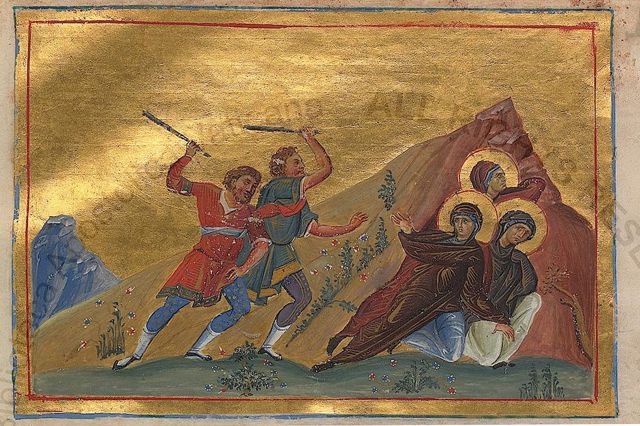
The news of their virtues and religious commitment reached Fronto, the Governor of Bithynia under Galerius, and he summoned them to meet him. When they were brought before him, Fronto was struck by their modest appearance, their downcast eyes, and the blush that colored their fair cheeks. He spoke to them gently and asked for their names and where they were from.
“We are three sisters, named at our baptism Menodora, Metrodora, and Nymphodora; as for our homeland, we are from Bithynia. We had one mother and one father, who loved us dearly and equally; we follow in their pious footsteps,” they replied.
“Dear maidens,” said the Prefect, “do not waste your noble opportunities and natural gifts. Let me be a father to you, care for you, and provide for your well-being. I will protect you, and my gods will watch over you.”
“We thank you,” said the maidens, “but what you offer is impossible for us to accept. All we ask is that, as we have lived together on earth, we may die together and be laid together in one grave of cold earth.”
The Prefect, having unsuccessfully tried all his persuasive tactics to convince the three young women to conform to the established religion, said sullenly, “Let the law take its course. Remove the two younger sisters, and let Menodora be punished.” Her back was bared, and she was tied to a post. Rods were used, and her delicate skin reddened and bruised under the blows. But she kept her eyes on heaven, and a light colored her cheeks. The magistrate spoke to her again, but she responded with such determination that he lost his patience and ordered her to be struck on the mouth. A blow from a cudgel broke her jaw. Then she sighed to Christ to take her, and her body sank, hanging at the wrists like a broken lily tied to a stake; and she was dead.
Four days later, the two surviving sisters were brought into court, where they saw Menodora's body lying on the sand, stripped, bruised, and with gaping wounds. It was a gruesome sight, and the magistrate hoped that the horror of it would weaken the resolve of the younger sisters. But it had the opposite effect. “If you will only sacrifice,” said Fronto, “I will write to the Emperor about you and arrange for you to have noble and wealthy husbands.”
“Sir,” said one of the young women, “we are three branches from one good root. We cannot dishonor the noble root that bore us by accepting what you offer or listening to your commands.”
Then Fronto ordered Metrodora to be hung up, and her delicate skin was burned with torches. The torture continued for two hours, and during that time, her voice rose in supplication to her Lord. Finally, it sank into silence; she was dead.
Nymphodora, the youngest and sweetest in appearance, was offered the same temptations that had been presented to her sisters. However, she rejected them with indignation and prepared herself to join her elder sisters. She was hung up by her wrists, and her sides were torn with iron hooks. Yet, she did not utter a word. Her large, soft eyes were fixed steadily on the blue sky, and they never wavered from the intensity of their gaze. Not a sound escaped her lips; only they moved slightly in inward prayer.
At last, Fronto, disgusted and angry, shouted, “Finish the scene; put an end to her with clubs." So she laid her gentle soul, like a dove for sacrifice, in the hands of her Lord and Savior.
Footnotes
- The Prefect is a high-ranking official in the Roman government.
Baring-Gould’s own footnotes, in modern English.
Read the original 1870s text
Baring-Gould’s sources: Greek Mensea and Menology, also the Russian {Calendar. Inserted by Baronius in the Modem Roman Martyrology. Authority: — The Acts by Metaphrastes founded on earlier acts.] Menodora, Metrodora, and Nymphodora were three virgin sisters, Christians, living in Bithynia, equally beautiful and good. Shunning the society of men, they lived together in tender love and earnest piety, near the Pythian baths, hot springs in Bithynia, the situation of which cannot now be fixed.
The news of their virtues and religious profession reached Fronto, Governor of Bithynia under Galerius [Diocletian’s co-emperor in the East and driving force of the Great Persecution], and he summoned them to his presence. When they were introduced, Fronto was struck with their modest appearance, their down-cast eyes, and the blush that mantled their fair cheeks. He addressed them gently, and asked their names and country.
“ We are three sisters, called at our baptism, Menodora, Metrodora, and Nymphodora; as for our country, we are natives of Bithynia. We had but one mother and one father, and we were dearly and equally loved by both; and we walk in their pious steps,”
“ Dear maidens,” said the Prsefect, “ do not turn to no advantage your noble opportunities and gifts of nature. Let me be a father to yon, care for you, and provide for your welfare. I will protect you, and my gods shall watch over you.”
“ We thank thee,” said the maidens; “ but what thou offerest is impossible for us to accept. All we ask of thee is that as we have lived together on earth, we may be suffered to die together, and be laid together in one bed of cold earth.”
The Prefect having vainly used all his blandishments to induce the three damsels to conform to the established religion, said sullenly, “ Let the law, then, take its course. Remove the two younger, and let Menodora be beaten.” Her back was bared, and she was strung up to a post. Rods were used, and her fair thin skin reddened and purpled under the blows. But she kept her eyes on heaven, and a light rose tinted her cheeks. The magistrate once more addressed her, but she answered him with so firm a heart, that he lost patience, and ordered her to be beaten over the mouth. A blow of a cudgel broke her jaws. Then she sighed to Christ to take her * her body sank, dragging at the wrists, like a broken lily bound to a stake; and she was dead.
Four days after, the two surviving sisters were brought into court, and there saw the body of Menodora lying on the sand, stripped, purple and black, and with the wounds gaping. It was a loathsome sight, and the magistrate hoped that the horror of it would shake the resolutions of the younger maidens. But it had a contrary effect. “ If you will but sacrifice/’ said Fronto, “ I will write concerning you to the Emperor, and obtain for you noble and wealthy husbands.”
“ Sir,” said one of the damsels, “ we are three branches sprung from one good root. We cannot shame the noble root that bare us by accepting what you offer, or listening to your commands.”
Then Fronto ordered Metrodora to be hung up, and her tender skin burnt with torches. For two hours the torture continued, and all that time her voice rose in supplication to her Lord. At last it sank to silence; she was dead. Nymphodora, the youngest and the sweetest of face, was
plied with the same offers which had been made to her sisters. But she shook them off with indignation, and prepared herself to join her elder sisters. She was hung up by the wrists, and her sides torn with iron hooks. But she uttered not a word. Her large soft eyes were fixed steadily on the blue sky, and never swerved from the intensity of their gaze. Not a sound escaped her lips, only they moved slightly with inward prayer. At last Fronto, disgusted and angry, shouted, “ Finish the scene; put an end to her with clubs." So she laid her gentle soul, like a dove for sacrifice, in the hands of her Lord and Saviour.