The Story
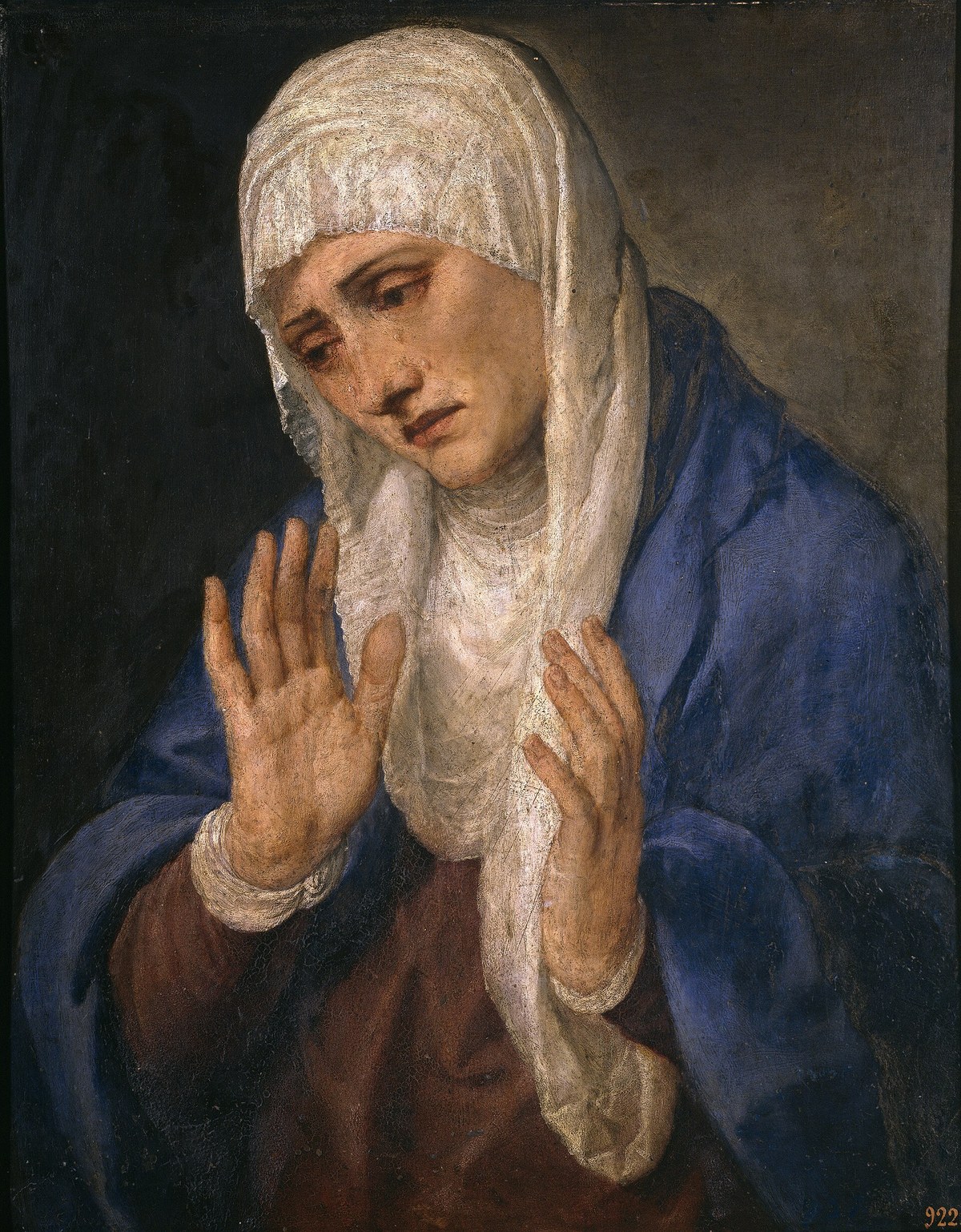
Our Lady of Sorrows is a title of Mary, the mother of Jesus. It is not the name of a second person. Latin calls her Beata Maria Virgo Perdolens, and also Mater Dolorosa, the sorrowful mother. The image shows her in tears, with one sword or seven swords in her heart. That picture comes from Simeon's words in Luke 2:34-35, that a sword would pierce her soul.
The Catholic Encyclopedia lists seven sorrows, from the responsories once used at Matins: Simeon's prophecy; the flight into Egypt; the loss of the child Jesus in Jerusalem; meeting Jesus on the way to Calvary; standing at the foot of the cross; Jesus taken down from the cross; and the burial. The flight, the loss in the temple, the cross, and the burial are in the Gospels. The meeting on the road to Calvary is the traditional fourth station. It is not a separate scene in the Gospel text.
The Servite order, from its early years on Monte Senario, took Mary's sorrow at the cross as a main devotion. A provincial synod at Cologne in 1413 set a feast of her compassion to make up for attacks on images. Pope Benedict XIII extended a feast of the seven sorrows to the Latin Church in 1727. Pope Pius VII extended the September feast in 1814, after his exile. The Roman calendar now keeps the memorial on 15 September, the day after the Exaltation of the Cross. The Friday before Palm Sunday is still kept as a Friday of Sorrows in some countries. The hymn Stabat Mater belongs to this devotion. People who are grieving are often sent to this title of Mary.
For today: If you are grieving, you can sit with the sorrow that is actually yours and with one Gospel scene that matches it: Simeon's words, the flight, the three days when the child was missing, or the cross. You do not have to take on all seven at once. 15 September is the day the calendar gives for this memorial.
