This Saint’s Story
He received his education at Glastonbury Abbey and later attended the Monk's Hostel at Cambridge, where he earned his Master of Arts degree in 1483. His early education laid a strong foundation for his future role in the Church.
Ordained as a deacon in 1500 and as a priest in 1501, Whiting returned to Cambridge in 1505 to pursue a Doctorate. He served as camerarius at Glastonbury, managing the daily needs of the monastic community. In 1525, after the death of Abbot Richard Beere, the monks elected Whiting as their new abbot with the approval of Cardinal Thomas Wolsey, marking the beginning of a prosperous decade under his leadership.
During his tenure, Glastonbury Abbey thrived, housing around one hundred monks and educating the sons of nobility. Whiting was respected for his spiritual guidance and effective management. However, the political climate changed dramatically with the Dissolution of the Monasteries initiated by King Henry VIII. Despite initial assurances of safety, the abbey faced increasing scrutiny.
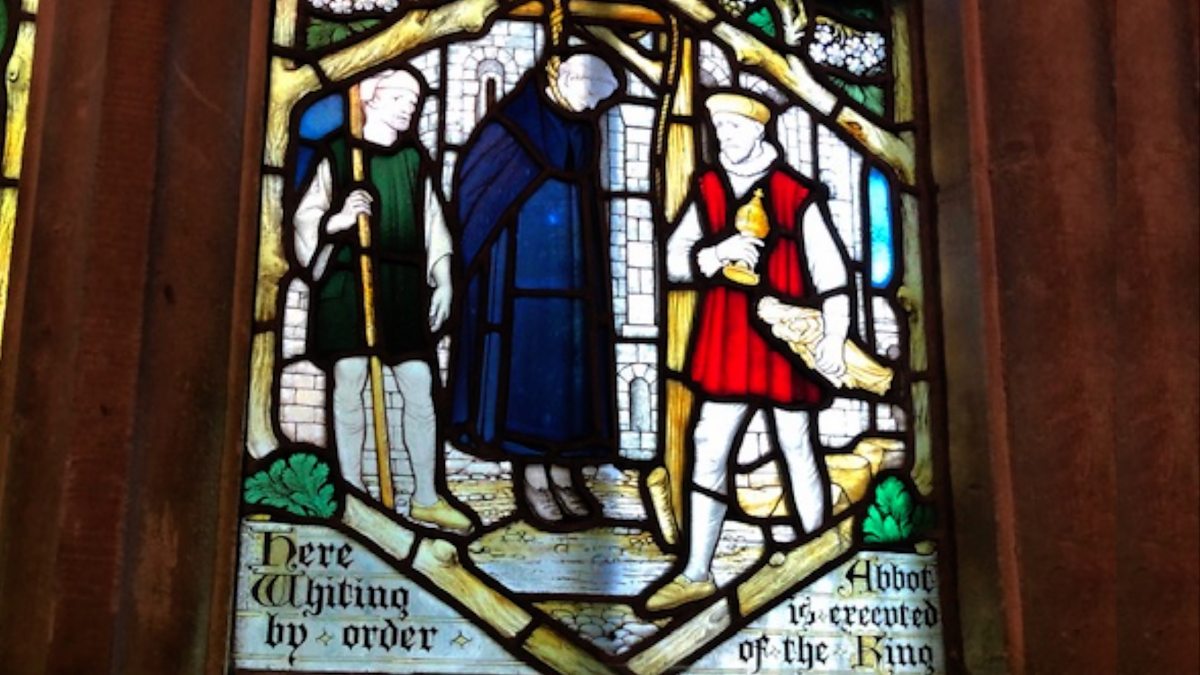
In 1539, as the last remaining monastery in Somerset, Glastonbury Abbey was targeted for dissolution. Whiting refused to surrender the abbey, leading to his arrest by royal commissioners. He was accused of treason, although the exact charges remain unclear. Following a swift and dubious trial, he was executed on November 15, 1539, alongside two of his monks, suffering a brutal death that solidified his status as a martyr.
Whiting was beatified (declared 'Blessed', the step before sainthood) by Pope Leo XIII on May 13, 1895, recognizing his sacrifice and loyalty to the Church during a tumultuous period in English history. His legacy continues to be honored, including the naming of a pastoral area in the Diocese of Clifton in his memory.