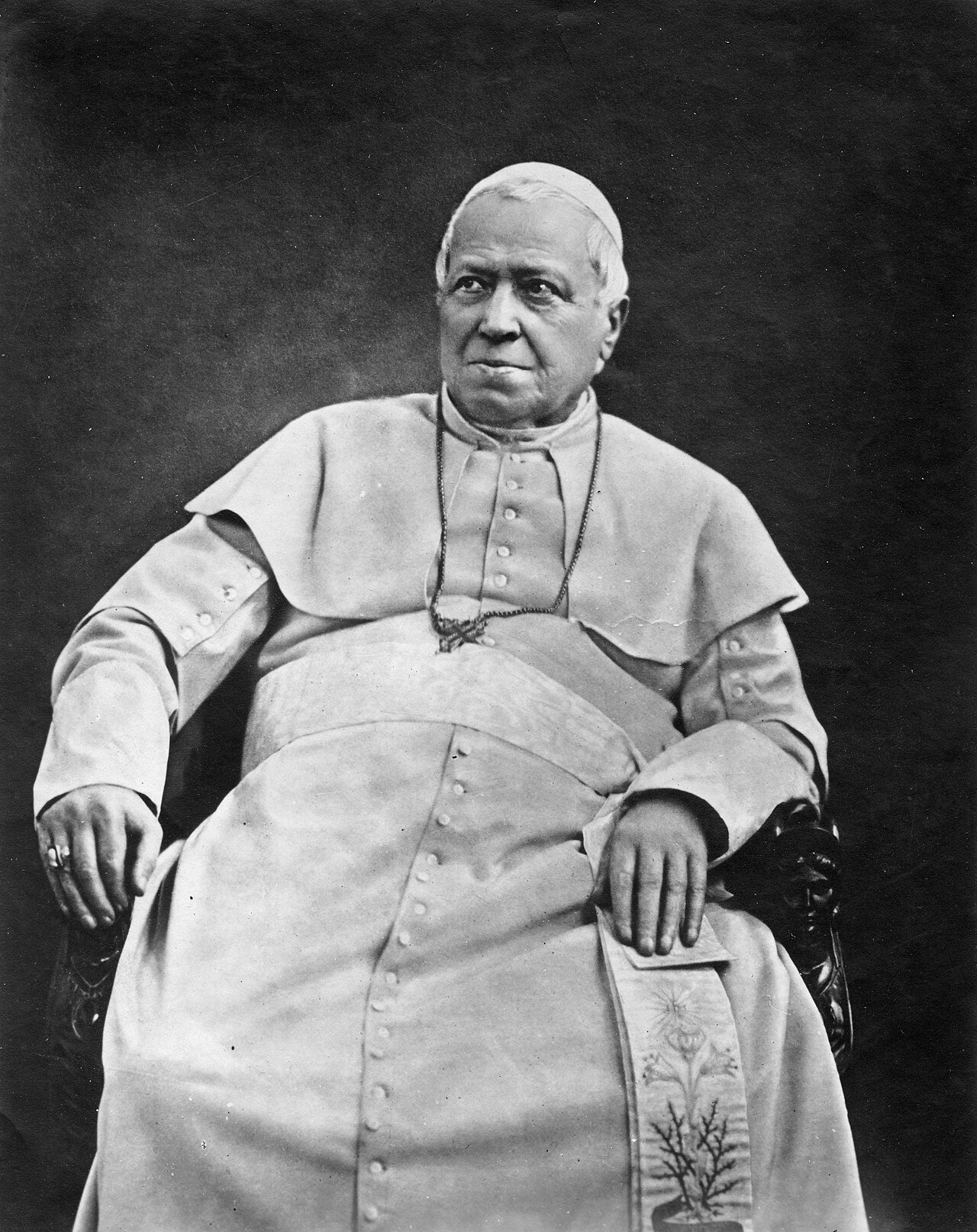
This Saint’s Story
Giovanni Maria Mastai-Ferretti was born on May 13, 1792, in Senigallia, Italy, as the ninth child in a noble family. He received his education in Volterra and later moved to Rome, where he studied philosophy and theology. After facing health issues, including epilepsy, he was ordained as a priest on April 10, 1819. His early ministry included serving in a prominent orphanage in Rome, where he developed a strong commitment to helping those in need.
In 1827, he became the Archbishop of Spoleto, where he gained a reputation for his progressive views and charitable actions, especially during a local earthquake. His leadership focused on improving priestly education and outreach to marginalized communities, including visiting prisoners and caring for street children. In 1840, he was made a cardinal and continued his work in the Diocese of Imola, where he was well-loved for his kindness and generosity.
Pius IX was elected pope on June 16, 1846, during a politically charged time in Italy. His election was celebrated by many who saw him as a reformer. Initially, he supported liberal reforms, including granting amnesty to political prisoners. However, his views shifted dramatically following the Revolutions of 1848, which led to his temporary exile from Rome. Upon his return, he adopted more conservative policies, emphasizing the Church's authority and opposing the growing nationalist movements in Italy.
Pius IX is perhaps best known for convening the First Vatican Council in 1868, which ultimately defined the doctrine of papal infallibility. His papacy faced significant challenges, including the loss of the Papal States to the Kingdom of Italy in 1870. He declared himself a 'prisoner of the Vatican' and refused to leave the city, symbolizing the Church's struggle for autonomy during this turbulent period.
After his death on February 7, 1878, Pius IX was beatified (declared 'Blessed', the step before sainthood) by Pope John Paul II on September 3, 2000, recognizing his contributions to the Church and his role in defining key doctrines.
