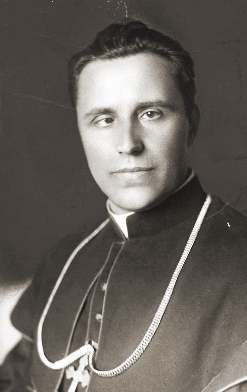
Bl. Hryhoriy Lakota
Hryhoriy Lakota was born on January 31, 1883, in the village of Holodivka, near Lviv, in what was then Austrian Galicia. He studied theology in Lviv, was ordained a priest of the Ukrainian Greek Catholic Church in 1908, and earned a doctorate in theology in Vienna in…
The story
Hryhoriy Lakota was born on January 31, 1883, in the village of Holodivka, near Lviv, in what was then Austrian Galicia. He studied theology in Lviv, was ordained a priest of the Ukrainian Greek Catholic Church in 1908, and earned a doctorate in theology in Vienna in 1911. In 1926 he was named auxiliary bishop of Przemyśl (Peremyshl), assisting the diocesan bishop.
After the Second World War the Soviet authorities set out to suppress the Ukrainian Greek Catholic Church. Lakota was arrested by the NKVD, the Soviet secret police, on June 9, 1946, and sentenced to ten years in the labour camps. Fellow prisoners, among them the Lithuanian priest Alfonsas Svarinskas, remembered his kindness and humility, and how he took on hardship himself to make life easier for others. He died in the Abez camp, near Vorkuta in Russia's far north, on November 12, 1950.
John Paul II beatified him in Ukraine on June 27, 2001, together with other Ukrainian Greek Catholic martyrs of the Soviet era. He and Josyf Slipyj are said to have inspired the fictional Ukrainian pope Kiril Lakota in Morris West's novel The Shoes of the Fisherman.
Blessed, not yet a saint
Hryhoriy Lakota was beatified in 2001.
Sources
Sources & notes
- Vatican, list of the Ukrainian martyrs beatified 27 June 2001
- Wikipedia, “Hryhoriy Lakota”
- Story written for this site from the sources above, in our own words.
- Further reading: Wikipedia, “Hryhoriy Lakota”. Feast day and dates: Wikidata Q549324.
- Image: Wikimedia Commons, Wikimedia Commons (Public domain)
