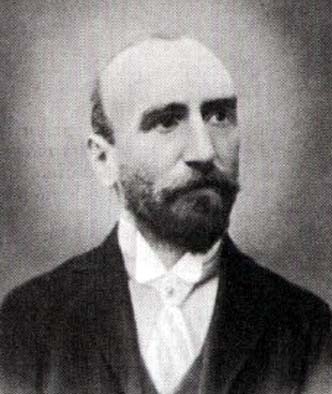
This Saint’s Story
His father, a professor of mathematics, nurtured Contardo's early education, instilling in him a passion for learning and a deep love for the Catholic faith. He was baptized at the same baptismal font as the renowned Frédéric Ozanam. At the age of twelve, he began his spiritual journey by becoming a member of a local religious group dedicated to the Eucharist, which further deepened his commitment to his faith.
At seventeen, Ferrini enrolled at the University of Pavia, where he quickly distinguished himself academically, eventually becoming dean of students. By the age of twenty-one, he earned his doctorate in law, with a thesis that intriguingly linked penal law to Homeric poetry. This accomplishment led him to a scholarship in Berlin, where he gained international recognition for his expertise in Roman-Byzantine law. His time in Berlin was marked by a profound experience of the universality of the Catholic Church, particularly when he received the Sacrament of Penance for the first time in a foreign country.
After returning to Italy, Ferrini took on teaching roles at several universities, including Messina, Modena, and Pavia. He became a professor at a remarkably young age and was known for his dedication to both his students and his faith. In 1886, he made a significant commitment by joining a Franciscan (the order of friars founded by St. Francis of Assisi) lay order, which allowed him to live out his spirituality while engaging in academic pursuits. His involvement with the Saint Vincent de Paul Society also reflected his dedication to serving the poor and marginalized in society.
In the late 1890s, Ferrini's health began to decline due to a heart condition, and he later contracted typhus while resting at his country home in Suna, located near Lake Maggiore. He passed away on October 17, 1902, at the age of 43. His death was met with immediate recognition of his sanctity by the local community, who regarded him as a saint even before any formal processes began. His colleagues at the University of Pavia also expressed their admiration for him in letters describing his saintly character.
The process for his canonization was initiated in 1909 under Pope Pius X, and he was declared Venerable by Pope Pius XI. Ultimately, he was beatified (declared 'Blessed', the step before sainthood) by Pope Pius XII on April 13, 1947. Today, his remains are venerated in a chapel at Milan's Catholic University, and he is celebrated for both his scholarly contributions and his exemplary Christian life.
