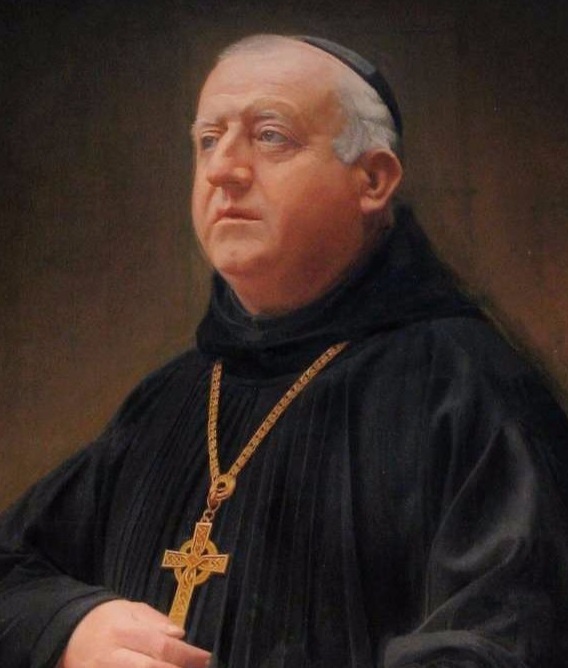
This Saint’s Story
His early education at Jesuit (member of the Society of Jesus, founded by St. Ignatius of Loyola) Belvedere College ignited a deep passion for God. At 16, he entered Holy Cross College seminary, where he developed a strong faith and a commitment to charity, exemplified when he selflessly helped a poor woman in need, sacrificing his savings for her debt.
After his ordination on June 16, 1881, Marmion served as a curate in Dundrum, Dublin, where he engaged deeply with the community, providing spiritual guidance and support. His talents in spiritual direction flourished during this time, and he later became a professor of metaphysics at Holy Cross College. Despite his success, he felt a calling to monastic life and, after visiting Maredsous Abbey in Belgium, he decided to join the Benedictine (monks following the Rule of St. Benedict) community there in 1886.
Marmion faced challenges during his novitiate at Maredsous, including loneliness and language barriers. However, he persevered, making his solemn profession in 1891. His preaching quickly gained recognition, and he was appointed to teach philosophy to fellow monks. In 1899, he played a significant role in founding the Abbey of Mont César in Louvain, where he became the first prior and continued his work as a spiritual director and lecturer, influencing many through his teachings.
In 1909, Marmion was elected the third abbot of Maredsous Abbey. He embraced the motto 'to be useful rather than to command,' focusing on the community's growth and spiritual development. His leadership was marked by efforts to modernize the abbey and a commitment to spiritual outreach, including assisting Anglican monks in their conversion to Catholicism. The outbreak of World War I posed significant challenges, but he worked tirelessly to ensure the well-being of his community during this tumultuous period.
Columba Marmion passed away on January 30, 1923, during an influenza epidemic. His reputation for holiness and spiritual insight had already spread widely. The Church recognized his life and contributions by beatifying him on September 3, 2000, through Pope John Paul II, highlighting his lasting impact on Catholic spirituality.
