Bl. Charlemagne

Charlemagne (died 814), emperor of the Franks, was honored as 'Blessed' locally in some places, but he has never been canonized for the universal Church. Baring-Gould includes him for that local cult. Charlemagne, son of King Pepin, was born in 742, and was crowned king of France in 768.

Read the essentials →
Traditional feast January 28 · —

Bl. Charlemagne

Feast

Traditional feast: January 28 (Baring-Gould, Lives of the Saints (this entry))
Traditional date · cited source, no current calendar entry found

Traditional feast

January 28
1914 / pre-1969 calendar, per Baring-Gould (1914)

Represents

Feast

Feast days

Feast: January 28

This Saint’s Story

Adapted in modern English from Alban Butler's Lives of the Saints · Baring-Gould original below

Charlemagne, son of King Pepin, was born in 742 and crowned king of France in 768. He conquered Lombardy, was crowned its king in 774, and granted Pope Adrian the exarchate of Ravenna.

In 778 he marched into Spain as far as the Ebro. On the way home his cousin Roland, leading the rear, was killed in the Pyrenees, and became the hero of many old French romances.

After the Saxon revolt of 782 he required the Saxons to become Christians; their leader Witikind was baptised in 785. The text on this page gives 814 for his death.

Status: Charlemagne was never formally beatified (declared 'Blessed', the step before sainthood) or canonized (officially declared a saint by the pope) by a pope. Butler explains that prayers for the repose of his soul were still offered at Aix-la-Chapelle until the antipope Pascal, at Frederick Barbarossa's request, enshrined his remains there and issued a decree of canonization. Butler adds that from then on he was honoured as a saint in many churches of Germany and the Low Countries. This local cult was tolerated, and Butler cites Benedict XIV for the view that the popes' tacit approval of it counts as equivalent to a beatification.

What he represents

How he teaches us to live

Drawn from themes in the original account

Feed your mind with Scripture and good books. Learning and the Scriptures matter in this life.

Take one thing from this life into your own. Not really a saint story in the modern sense: read it as history.

The full story

Baring-Gould’s account retold in modern English

Read the full story · 326 words · about 1 min

The public life of Emperor Charlemagne belongs to the realm of secular history, rather than to the study of saints. In this notice, we will focus on those actions that have earned him a place in the Church's calendar.

Charlemagne, the son of King Pepin, was born in 742 and was crowned king of France in 768. In the early years of his reign, he committed serious moral faults, which he later deeply regretted. He appears to us as a man filled with a strong sense of religious duty and faith in the divine mission of the Church. Even amidst his wars, the spread of the true faith and the promotion of learning were always on his mind. He was enthusiastic about reforming the monasteries, and to ensure uniformity, he introduced the Rule of Saint Benedict into them. For the discipline of the clergy, he arranged for many synods to convene, during which his famous Capitulars were created. He diligently reflected on the Scriptures, attended the divine office, even at midnight if possible, had good books read to him at meals, and took only one meal a day. He died at the age of seventy-two in Aix-la-Chapelle in 814, where he was buried. His tomb was opened in 1165. The body was found not lying in his coffin, as is the usual custom for the dead, but seated on his throne as if alive, dressed in imperial robes, holding a scepter in his hand, with a copy of the Gospels on his knees. On his bony forehead was a crown, the imperial mantle draped over his shoulders, the sword Joyeuse was at his side, and the pilgrim's pouch, which he had carried throughout his life, was still attached to his belt. His skull, throne, and hunting horn are preserved in the sacristy at Aix.

Baptism of the vanquished Saxons by command of Charlemagne. From a miniature of the 15th century in the Burgundy Library at Brussels.

Footnotes

  1. "That Cyril had any share in this atrocity," says Canon Robertson, "appears to be an unsupported calumny."
  2. Decline and Fall, Ed. Bohn.
  3. Chiefly from Bright's Church History.
  4. Saint Valerius, Bishop of Trèves, end of 1st century.
  5. Saint Constantius, Martyr at Perugia, between AD 161-168.
  6. Saints Sabinian, Martyr, and Sabina, Virgin, at Troyes, in France, around AD 275.
  7. Saints Papias and Maurus, Martyrs, at Rome, around AD 303.
  8. Saint Gildas the Wise, Abbot in Brittany, 6th century.
  9. Saint Sulpicius Severus, Bishop of Bourges, AD 591.
  10. Saint Baculus, Bishop of Sorrento, around AD 679.
  11. Saint Peter Thomasius, Latin Patriarch of Constantinople, AD 1366.
  12. Saint Francis of Sales, Bishop of Geneva, AD 1622.

Baring-Gould’s own footnotes, in modern English.

Read the original 1870s text

Baring-Gould’s sources: Inserted in many French, German, and Belgian Martyrologies. He was canonized by the Anti-pope Paschal III. The life of this emperor, written by his secretary Eginhart, together with the numerous historical accounts of his transactions, supply abundant material for his life.

The public life of the Emperor Charlemagne [king of the Franks, crowned emperor in 800] belongs to the domain of secular history, rather than to hagiology. We shall confine ourselves, in this notice, to those acts which have obtained for him a place in the Kalendar of the Church.

Charlemagne, son of King Pepin, was born in 742, and was crowned king of France in 768. In the early years of his reign he was guilty of grave moral faults, which he deeply deplored in his after life. He comes before us as a man penetrated with a strong sense of religious responsibility, and of faith in the divine mission of the Church. In the midst of his wars, the spread of the true faith, and the advancement of learning, were never absent from his mind. He was zealous in reforming the monasteries, and for the sake of uniformity, he introduced into them the rule of S. Benedict [father of Western monks (d. c. 547), author of the Rule]. For the discipline of the clergy, he procured the convention of many synods, in which were drawn up his famous Capitulars. He meditated assiduously on the Scriptures, assisted at the divine office, even that of midnight, if possible; had good books read to him at table, and took but one meal a day. He died at the age of seventy-two, at Aix-la-Chapelle, in 814, and was there buried. His tomb was opened in 1165. The body was found, not reclining in his coffin, as is the usual fashion of the dead, but seated on his throne as one alive, clothed in the imperial robes, bearing the sceptre in his hand, and on his knees a copy of the Gospels. On his fleshless brow was the crown, the imperial mantle covered his shoulders, the sword Joyeuse was by his side, and the pilgrim's pouch, which he had borne always while living, was still fastened to his girdle. His skull and throne and hunting horn are preserved in the sacristy at Aix.

Baptism of Vanquished Saxons by command of Charlemagne. From a Miniature of the 15th Century in the Burgundy Library at Brussels.

FOOTNOTES:

[128] "That Cyril had any share in this atrocity," says Canon Robertson, i. 401, "appears to be an unsupported calumny."

[129] Decline and Fall, Ed. Bohn, i. p. 348.

[130] See p. 406 .

[131] Chiefly from Bright's Church History.

S. Valerius , B. of Trèves, end of 1st. cent. S. Constantius , B.M. at Perugia, between a.d. 161-8. SS. Sabinian , M. , and Sabina, V. , at Troyes, in France, circ. a.d. 275. SS. Papias and Maurus , MM., at Rome, circ. a.d. 303. S. Gildas the Wise , Ab. in Brittany, 6th cent. S. Sulpicius Severus , B. of Bourges , a.d. 591. S. Baculus , B. of Sorrento, circ. a.d. 679. S. Peter Thomasius , Latin Patr. of Constantinople , a.d. 1366. S. Francis of Sales , B. of Geneva , a.d. 1622.
Help us add to this saint's story

Everything is read by a person before anything appears. Facts are checked against trusted sources first.

Facts are welcome; a source link helps (optional).With your permission we may share it on this page.

Nine days · Free

Pray the novena
with us.

One short email a day for nine days. The day's prayer, a line from Bl. Charlemagne's story, and a nudge to keep going.

Also on January 28
T

Sts. Thyrsus

January 28 · Martyrs
St. Valerius of Saragossa

St. Valerius of Saragossa

January 28 · Bishop
P

St. Palladius in Syria

January 28 · Hermit
← All 1970 saints in the library
Sources & notes

Feast-day sources

Story sources

Sources

Credits

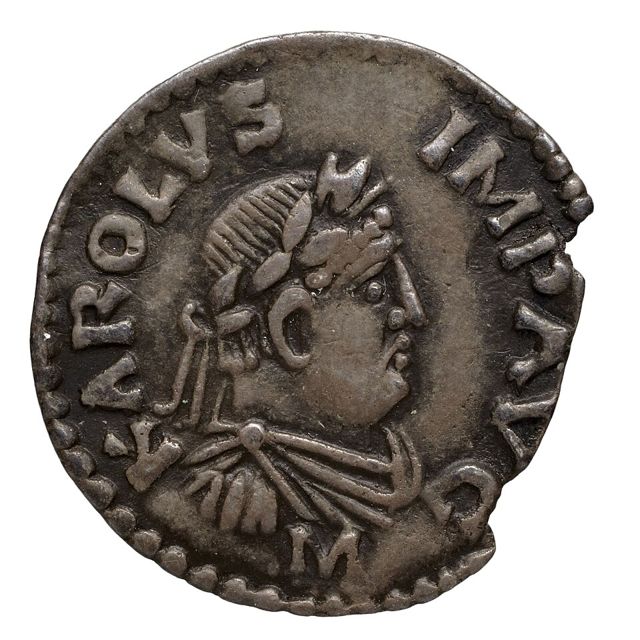
Image: Charlemagne denier Mayence 812 814.jpg · Charlemagne. Autorité émettrice de monnaie indéterminé. Atelier monétaire. Émetteur · Public domain, via Wikimedia Commons

Image: Charlemagne. Autorité émettrice de monnaie indéterminé. Atelier monétaire. Émetteur, Wikimedia Commons (Public domain)

Retold in plain modern English from Baring-Gould’s public-domain text, sentence by sentence, keeping the same facts and order. Short explanations in parentheses are ours.

From Sabine Baring-Gould, The Lives of the Saints, new and revised edition (Edinburgh: John Grant, 1914; first edition 1872). Public domain in the United States. Reproduced unedited, except for short bracketed notes in grey that we added to explain names and terms (“S.” is the old abbreviation for Saint). Some history and judgments reflect 19th-century scholarship.