This Saint’s Story
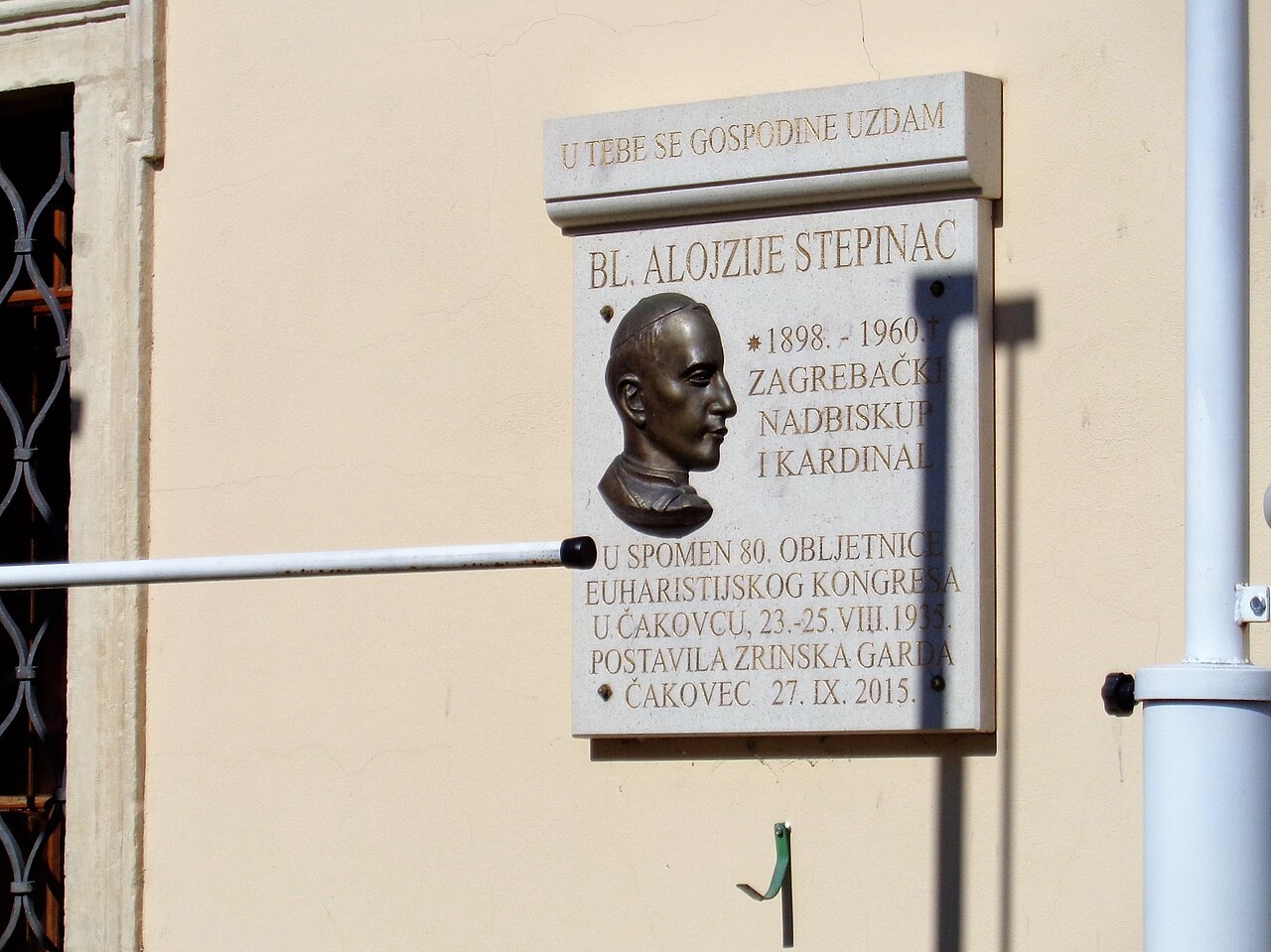
Aloysius Viktor Stepinac was born on May 8, 1898, in Brezarić, Croatia, into a well-to-do family. His mother, a devout Catholic, hoped he would become a priest. After moving to Krašić in 1906, Stepinac attended local schools and later high school in Zagreb, where he began to seriously consider the priesthood. He joined the Austro-Hungarian Army during World War I, and after being captured, he spent time as a prisoner of war before returning home in 1919. He then enrolled in the seminary, where he studied theology and philosophy in Rome, ultimately being ordained a priest in 1930.
In 1934, Stepinac was appointed coadjutor bishop of Zagreb, becoming the youngest person to hold such a position in the Catholic Church at that time. His leadership was marked by a commitment to serve the people, and he quickly became known for his dedication to charitable work, founding the archdiocesan branch of Caritas. By 1937, he succeeded Archbishop Antun Bauer as the Archbishop of Zagreb. His tenure coincided with the rise of the Ustaše regime during World War II, a time of great moral and political turmoil in Croatia.
During the war, Stepinac faced significant challenges as he navigated the complexities of the Ustaše regime, which was aligned with Nazi Germany. He was known for his efforts to protect individuals, including Jews and Orthodox Christians, from persecution. However, his relationship with the regime was controversial, as some critics accused him of providing legitimacy to their rule. Despite this, he maintained his commitment to the Church and its teachings, often speaking out against injustices.
After the war, Stepinac was tried by the communist government of Yugoslavia, which accused him of treason and collaborating with the Ustaše. The trial was widely viewed as politically motivated, and he received a harsh sentence of 16 years in prison, although he served only five years before being placed under house arrest. Throughout this period, he remained steadfast in his faith, famously stating that his conscience was clear. He died on February 10, 1960, in Krašić, after suffering from health issues related to his imprisonment.
Stepinac's legacy continued to be a topic of debate long after his death. He was beatified (declared 'Blessed', the step before sainthood) by Pope John Paul II on October 3, 1998, recognized as a martyr for his unwavering faith and leadership during a time of persecution. His beatification was celebrated by thousands in Croatia, highlighting his significance in the nation's religious and historical narrative.